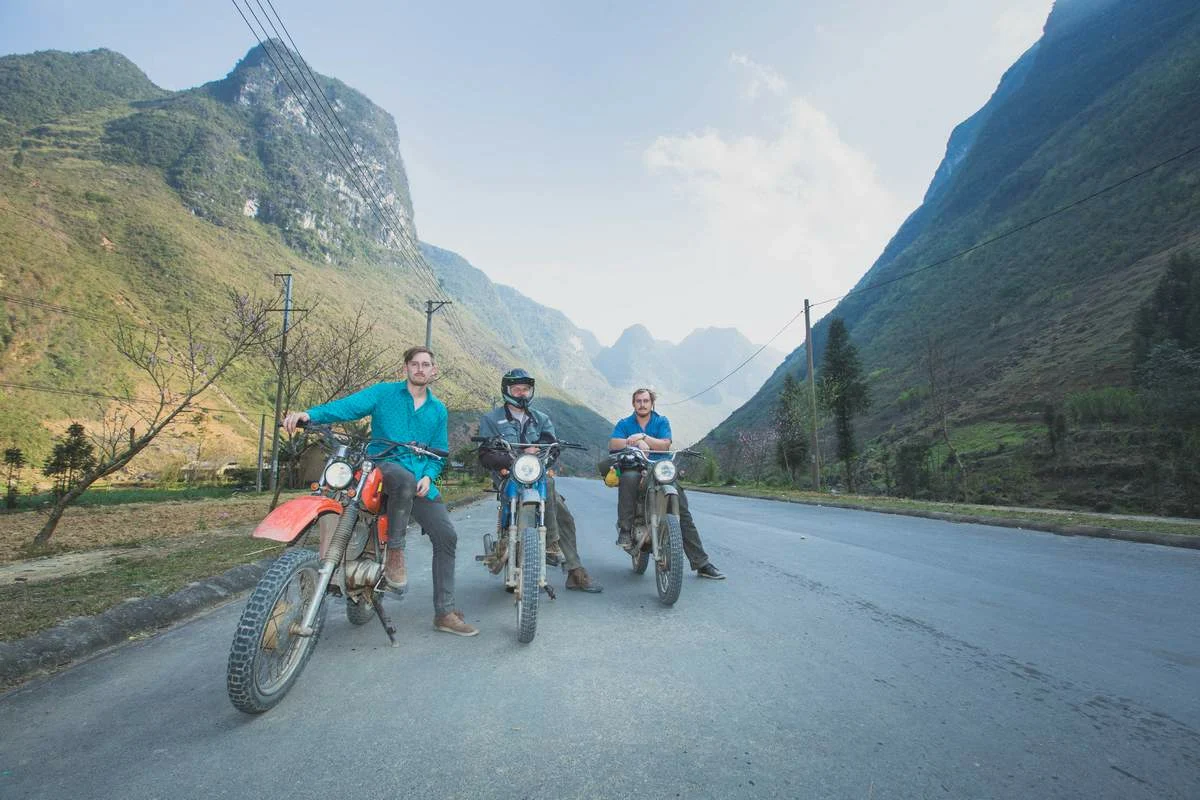

There has at all times been a touch of romance to the phrases highway journey; a lot, in actual fact, that it has turn into the premise for novels like Jack Kerouac’s On the Highway or movies like Straightforward Rider and even the satirical Nationwide Lampoon’s Trip.
At a time when travellers are in quest of extra genuine and immersive experiences, the attraction of highway journey is stronger than ever, particularly inside Asia.
Certainly, to go by an Agoda report from September of this yr, we’re seeing a surge in highway journeys, given an 81 % improve in international automobile leases over the previous twelve months.
Happening highway journeys is seen as a extra experiential different to traditional mounted itinerary excursions, giving travellers extra freedom to personalise their experiences.
Highway journeys within the context of anti-tourism
One time period we’d like to bear in mind as 2026 segues into 2027 is anti-tourism or tourism phobia, a state whereby native communities harbour unfavourable and even hostile attitudes in the direction of tourism, vacationers, and the journey business.
Because the Handbook of Analysis on the Impacts, Challenges, and Coverage Responses to Overtourism printed by Spain’s College of the Balearic Islands places it:
“[Anti-tourism] usually begins as sentiments and might turn into social actions when tourism begins to have a perceived unfavourable affect within the residents’ lives. [It is] carefully associated to touristification, overtourism, and tourism gentrification.”
Within the context of highway journey, anti-tourism manifests because the deliberate option to keep away from overcrowded hotspots in favor of tranquil secondary markets.
Think about this: search visitors for secondary Asian locations is rising 15 % quicker than conventional vacationer hubs, and travellers are driving themselves or utilizing regional transport to discover areas which can be in any other case arduous to succeed in.
Such road-accessible locations embrace mountain passes, terraced fields in northwestern Vietnam, in addition to quiet coastal retreats throughout Malaysia and Thailand.
On the identical time, the de rigueur mindset for the trendy traveller revolves round slower high-intent journey.
This implies travellers are taking advantage of regional highway networks to cut back their carbon footprint, handle their publicity to excessive climates, and instantly help rural economies that miss out on typical airport-to-hotel vacationer visitors.
Youthful travellers within the drivers’ seat
This resurgence in immersive highway journey is being pushed considerably by youthful travellers.
Of the greater than 89 % of travellers choosing non-urban leisure journeys this yr to search out nature, peace, and community-based heritage experiences, the majority belong to the Millennial era and Gen Z.
Value, after all, is one other driving issue because the development can also be being fuelled by financial and geopolitical friction.
Travellers in Asia and past are reallocating their journey budgets because of the rising price of airfare, the spate of flight disruptions, and a normal want to keep away from conflict-hit flight corridors.
Nothing, in my private opinion, tends to detract an intrepid traveller from seeing the world; and hitting the highway to see extra of it (and definitely at nearer quarters) goes to be a viable choice within the coming yr.