
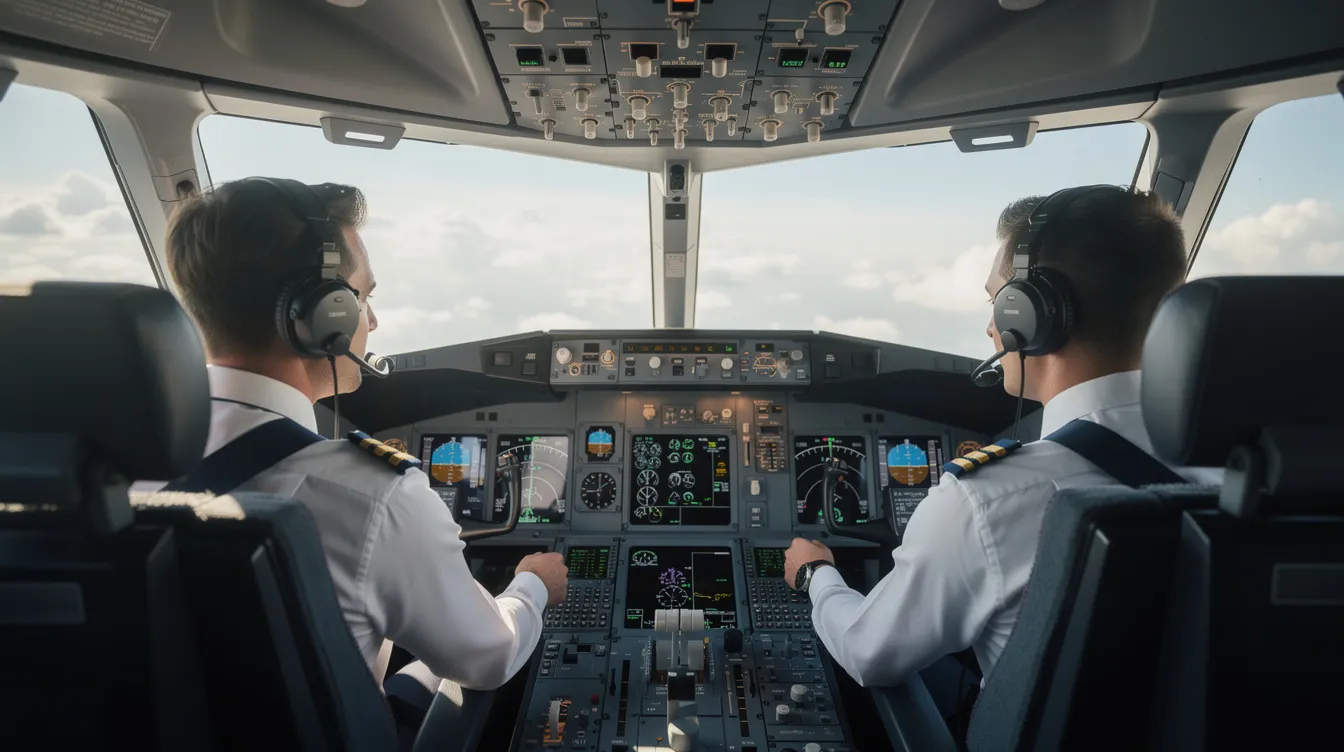

In June of final 12 months, industrial aviation noticed some of the chilling incidents in current reminiscence: the crash of Air India Flight 171.
On thirteenth June 2025, the day after the crash, we revealed a follow-up piece whereby we requested if the worldwide aviation business must retool its flight security protocols.
However now, greater than a 12 months on, we have now to marvel if we had been maybe asking the fallacious questions: what if it isn’t a lot the operational protocols that should be modified, however the general wellbeing of these tasked to fly folks from one vacation spot to a different?
By which case, what measures should be put in place to make sure that folks working in aviation are more healthy each bodily and emotionally?
The necessity for psychological well being reform in aviation
Final 12 months, following the crash, the Indian Directorate Normal of Civil Aviation (DGCA) dismissed three airline personnel based mostly on the preliminary findings of the post-incident investigation.
Per a characteristic on Airline Buzz:
“The inner audit revealed a sequence of great violations, together with pilots exceeding authorized flight hours, failure to examine emergency gear on time, and non-compliance with security procedures…In line with inside sources, a crew member withdrew from responsibility the day earlier than the accident, citing stress.”
As tragic because the accident was, aviation professionals are grateful that it served to focus on the urgent have to look after the psychological well-being of pilots and flight crews.
This resulted in elevated deal with general pilot wellbeing on the a part of Air India and the related regulatory our bodies, offering the impetus for brand spanking new initiatives that make psychological and bodily well being precedence areas.
Since June of final 12 months, airways all through India have launched nameless counselling providers, common temper surveys, a 360-degree suggestions system, in addition to new workload laws.
Why has it taken so lengthy for aviation to even take into account reforms?
On twenty sixth July of final 12 months, the Transportation Trades Division (TTD) of america referred to as on lawmakers to reform the measures governing psychological well being protocols for each pilots and air site visitors controllers.
This name to motion took place within the wake of two worldwide incidents: AI171 and that of South Korean low-cost provider Jeju Air in late December 2024.
In line with the official TTD assertion:
“For much too lengthy, aviation professionals have confronted a tough alternative between looking for crucial psychological well being care and sustaining their careers. The present Federal Aviation Administration (FAA) regulatory framework creates a punitive tradition that forces pilots and air site visitors controllers to threat their livelihoods when looking for skilled assist. This outdated method not solely harms people but in addition undermines the security requirements of belief and collaboration that the US aviation system is constructed upon.”
Certainly, industrial pilots averted reporting psychological well being struggles or burnout out of concern of being grounded, penalized, or terminated, a dire state of issues which has gone on for many years.
Following each incidents, and most notably AI171, authorities found that crew members tried to voluntarily withdraw from duties citing stress simply earlier than the accident.
As TTD officers found, disclosing a psychological well being situation primarily precluded aviation operations and security professionals from working.
As they put it: “Below the present guidelines, these professionals who search assist for psychological well being circumstances are handled on a case-by-case foundation, whereby they might apply for a particular issuance medical certificates if they will show that the handled situation is well-controlled and unlikely to affect flight security. This evaluate and particular issuance contain further testing and documentation from medical professionals and can lead to prolonged delays and backlogs, generally so long as 18 months.”
As a result of these points, pilots and air site visitors controllers ran the danger of dropping their livelihoods; and this resulted in vital underreporting of psychological well being points and plenty of reporting again to work regardless of not being in the perfect state of mind to take action.
What the world can be taught from how India dealt with the scenario
Since June 2025, Indian aviation authorities have modified the sport relating to the bodily and psychological wellbeing of their professionals.
Such measures have included the next:
Prolonged weekly relaxation intervals
Necessary weekly relaxation for pilots has been elevated to 48 consecutive hours, a considerable bounce from the earlier 36-hour minimal.
This 48-hour block should explicitly embody two full native nights on the pilot’s house base to make sure ample restoration and circadian alignment.
On the similar time, airways could not substitute a pilot’s earned or scheduled depart to rely towards this obligatory weekly relaxation interval.
Redefined evening flying and responsibility restrictions
The definition of evening hours which account for the essential Window of Circadian Low (WOCL) has been prolonged, now spanning from 12:00AM to six:00AM.
For flight operations that encroach upon these evening hours, most flight time is strictly capped at eight hours, and complete flight responsibility intervals are restricted to ten hours.
Additionally, to forestall high-stress cumulative fatigue, pilots are restricted to only two evening landings per responsibility interval, a steep discount from the six landings beforehand permitted.
Relaxation enhancements for these flying ultra-long-haul assignments and cumulative workload caps
For extremely demanding trans-meridian, ultra-long-haul flights crossing a number of time zones, minimal post-flight relaxation has been elevated to 144 hours from 120 hours.
A further obligatory 24-hour relaxation interval can be required instantly after a crew operates two consecutive long-haul flights.
On the similar time, to forestall cumulative, long-term fatigue from increase over weeks, the DGCA positioned a firmer higher sure on rolling workload accumulation:
- In seven consecutive days: Most 35 flying hours.
- In 14 consecutive days: Most 65 flying hours.
- In 28 consecutive days: Most 100 flying hours.
Accountability and fatigue reporting is now obligatory
Airways are legally mandated to submit complete quarterly fatigue knowledge on to the regulator.
Additionally, to make sure sincere compliance, the DGCA requires these company fatigue experiences to observe a strictly confidential and non-punitive security coverage.
This protects pilots from profession backlash in the event that they report being unfit to fly as a consequence of exhaustion.